

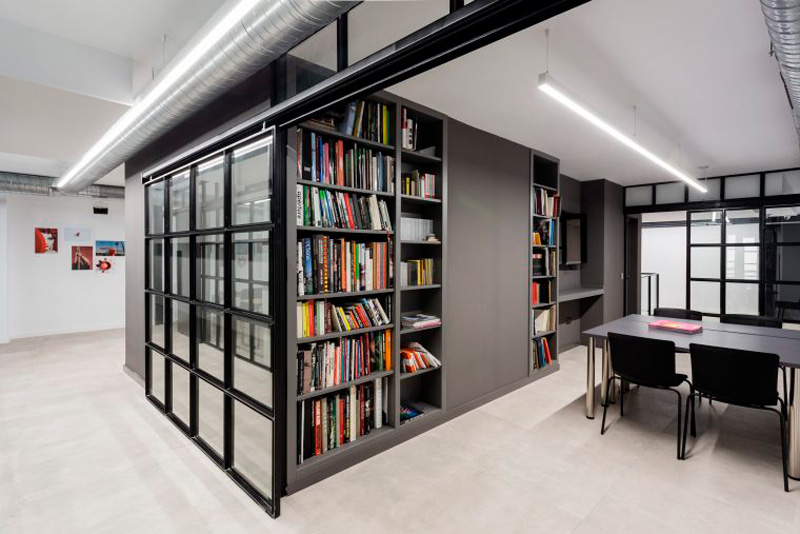
Flexibility as a design solution in response to the changing needs of new users and the high cost per square meter.
Flexibility is an essential concept to consider in contemporary interior design. The high price per square meter, both in housing and workspaces, means that integrating this concept into the design project brings functional and emotional advantages to the interior space. There are quantitative advantages at a functional level, since the same space can be used for different purposes, but also qualitative advantages, as the perception of the same place is enriched, revealing different versions and avoiding monotony, thus improving the user experience.
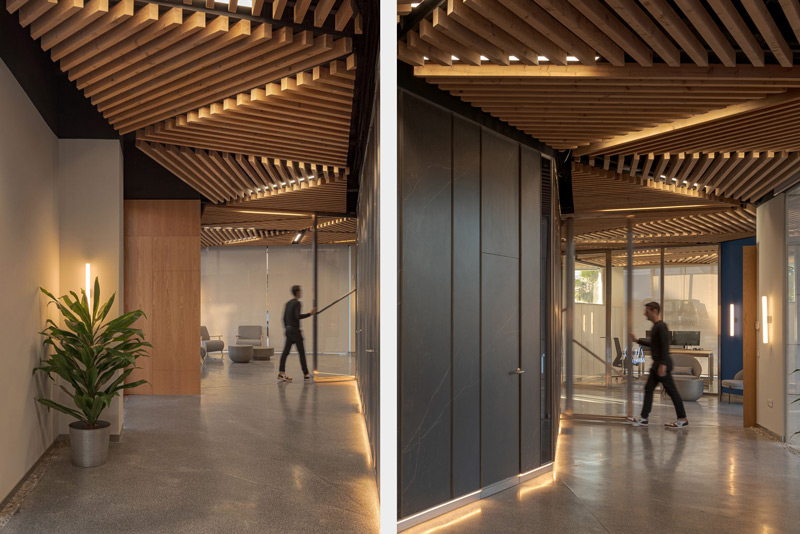
Flexibility in residential spaces
Designing versatile interiors allows a single room to adapt to different uses. It could be interesting to see how a guest bedroom, used only occasionally, can be transformed into a workspace or office, optimizing its use the rest of the time. In small apartments, the kitchen or dining table can become a study area if the furniture is neutral and designed for multifunctional use, allowing for tidying and storage (of a computer or documents), discreetly changing the setting while maintaining the room’s harmony.
Flexibility in workspaces
In the small business sector, we can propose an open break area that can be used for informal meetings or gatherings that don’t require confidentiality. Or, an office where the kitchen can be concealed behind a paneling system, creating a neutral backdrop that doesn’t visually overwhelm the space, allowing the room to be used as a meeting area. These solutions offer efficiency without sacrificing design.
The role of color
In these types of solutions, whether for residential or workspaces, the use of color also plays an important role. If the intention is to promote different activities, some related to domestic life and others to professional life, it’s important to use neutral color palettes that are easy on the eyes and don’t make the space visually recognizable. The goal is to create a beautiful and harmonious space without any pretensions of being unique.
Real-world examples: MLKT Studio projects
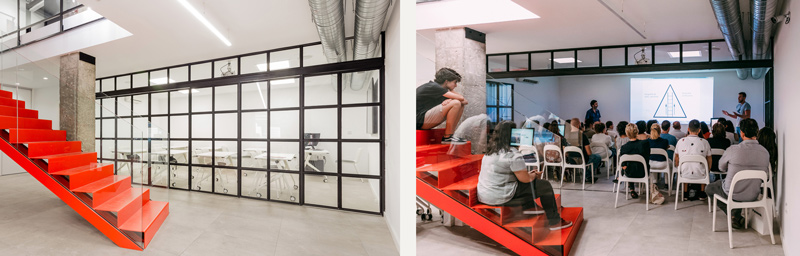
In the case of the Apertura Photography School (Malaga), at MLKT Studio we designed spaces such as the library and classrooms that have a daily teaching function but when there are exhibitions or talks, they are transformed and reconfigured by means of sliding glass and steel doors offering another different version in which the attendees of the events enjoy 100% of the experience of the place.
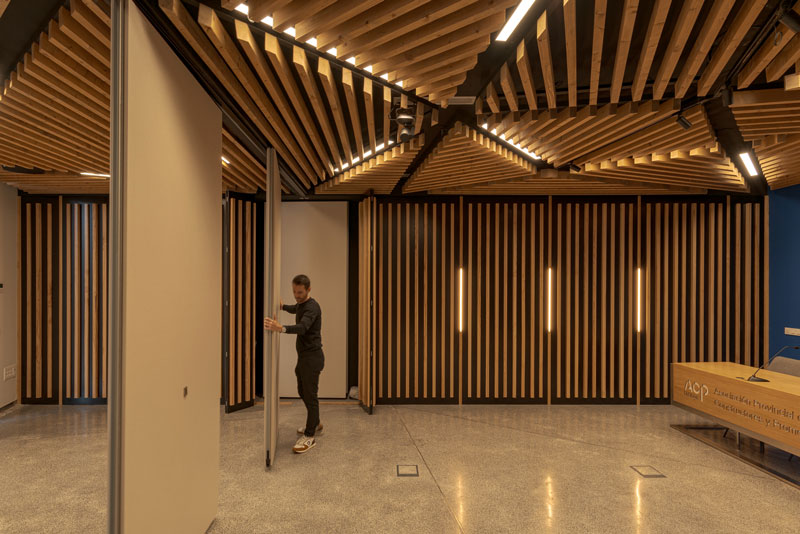
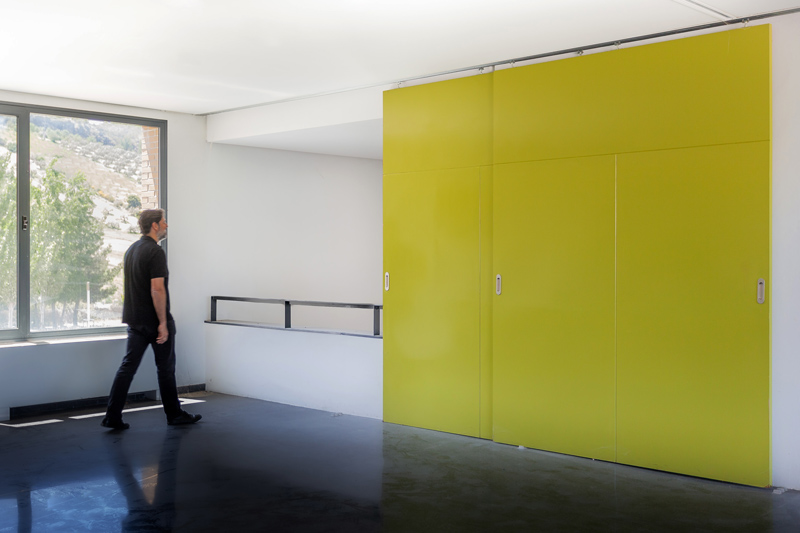
In the design of ACP’s new headquarters in Málaga, movable panels allow the conference room to be divided into several classrooms, giving the space great versatility. These panels are concealed behind joinery designed by MLKT Studio so that, when not in use, the space can be utilized without losing a single square meter. Sliding doors are also used to partition the office, achieving energy savings by isolating areas that do not require climate control during periods of inactivity. These movable systems allow us to connect or separate spaces, achieving the desired level of privacy. Furthermore, they offer a wide range of materials and designs that can be aligned with the aesthetic of the rest of the space. Therefore, we aim to leverage these systems as distinctive design elements with an aesthetic quality that adds visual appeal and beauty to the interior space.
In the residential field, we have carried out projects such as the renovation of the house in the Chamberí neighborhood of Madrid where the study and living room can be added, giving rise to a large open and fluid space, or divided for situations where a more secluded feeling is sought when the owners want to carry out independent activities.
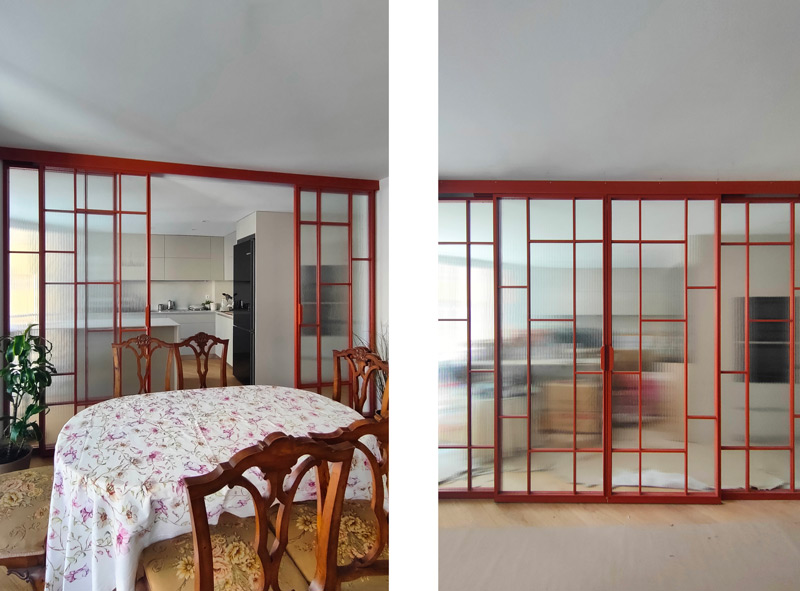
Or this other renovation in La Malagueta, in Malaga, where they play with connecting the kitchen and living room with a fluted glass sliding door.
Focusing on user experience, a fundamental aspect for MLKT Studio, flexibility encourages user interaction with their own space, allowing them to reinvent their home or office, change it, and consequently become an active participant. It’s a pleasurable action; movement connects us to a playful or interactive experience.
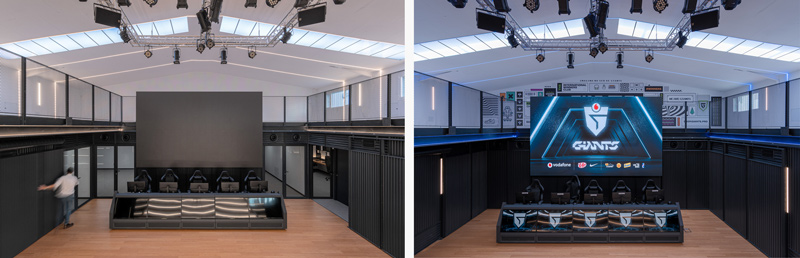
This is the case with the headquarters of the professional e-sports team, Home of Giantx, where the central space of the project is enclosed, serving as a stage that focuses attention on the competition. However, during the day, during working hours, it is open so that club employees can stay connected, fostering a fluid relationship.
Conclusion: a tool that defines space
In our experience, whether in homes or workspaces, flexibility, when implemented through user-centered design, allows us to redefine space and adapt to multiple needs, enabling diverse and efficient use. It brings dynamism and uniqueness, and fosters a deeper connection with the spaces we inhabit.
A space can be much more than just a room. At MLKT Studio, we enjoy using this tool as a design resource to explore all the opportunities that each project presents.